The Invitation-Only Workshop on Autogenic mHealth: Self-directed Monitoring, Management, and Intervention is designed as an interactive and forward-thinking event bringing together a select group of researchers and leaders from digital health, behavioral science, artificial intelligence, sensing, medicine, and human-computer interaction. The workshop will utilize a multifaceted format incorporating presentations, demonstrations, brainstorming sessions, interactive discussions, breakout groups, and opportunities for collaboration. This format is intended to encourage active engagement, cross-disciplinary exchange, and the development of a shared understanding of this emerging research paradigm.
The workshop will explore how rapid advances in biosignals, multimodal sensing, foundation models, generative AI, digital twins, and agentic AI can enable a fundamental shift in personalized digital health. Rather than relying exclusively on interventions designed and prescribed by researchers or clinicians, Autogenic mHealth envisions intelligent systems that work continuously with individuals to interpret their physiological and behavioral data, incorporate scientific and clinical knowledge, help them understand their own health, evaluate potential strategies, and adapt their approach over time.
The workshop will establish a common vocabulary and scientific foundation for Autogenic mHealth while identifying the theoretical, methodological, technological, and ethical advances needed to move from expert-driven interventions toward participant-driven health management.
Autogenic mHealth is an emerging paradigm for personalized digital health in which individuals work continuously with intelligent systems to monitor, understand, and manage their own health. Rather than relying solely on expert-designed and delivered interventions, Autogenic mHealth shifts toward participant-driven health management, with AI-enabled systems interpreting personal physiological, behavioral, and contextual data while incorporating scientific and clinical knowledge to support individualized decisions.
Advances in biosignals, multimodal sensing, foundation models, generative AI, digital twins, and agentic AI are creating the technological foundation for this shift. These capabilities can enable systems to move beyond passive monitoring and static recommendations toward continuous partnerships that help individuals discover what to monitor, understand patterns in their health and behavior, explore potential strategies, and learn from the results over time.
At its core, Autogenic mHealth represents a shift from expert-driven intervention to participant-driven self-management:
Monitor → Understand → Explore → Act → Learn → Adapt
The goal is not to replace researchers or clinicians, but to extend scientific and clinical knowledge into an ongoing partnership with individuals, enabling more informed, personalized, and adaptive health decisions in everyday life.

Traditional mHealth has largely centered on interventions designed by experts and delivered to individuals. Researchers and clinicians typically identify what should be measured, determine the desired outcome, develop an intervention, and establish when and how it should be delivered. Even personalized approaches generally operate within a framework defined in advance.
Autogenic mHealth shifts this model toward participant-driven health management. Instead of simply receiving predetermined recommendations or interventions, individuals work with intelligent systems to understand their own health, identify meaningful patterns, explore potential strategies, and learn from their experiences. The system continuously integrates personal data with scientific and clinical knowledge, allowing the process to evolve as the individual’s goals, context, and health change.
This represents a shift from:
Expert-driven → Participant-driven
Predetermined interventions → Self-directed strategies
Static recommendations → Continuous learning
Passive monitoring → Active understanding
Intervention delivery → Ongoing health partnership
The distinction is fundamental: Autogenic mHealth is not simply about making existing interventions more intelligent. It is about enabling individuals to become active participants in the process of discovering, understanding, and managing their own health.
The workshop will explore the emerging frontier of Autogenic mHealth and its potential to transform personalized digital health. Participants will examine how biosignals, multimodal sensing, foundation models, generative AI, digital twins, and agentic AI can work together to create intelligent systems that continuously learn from an individual’s physiological, behavioral, and contextual data. Particular attention will be given to how these technologies can move beyond passive monitoring and static recommendations toward systems that actively support individuals in understanding and managing their own health.
The workshop will identify opportunities and challenges associated with moving from expert-driven interventions to participant-driven self-management. Participants will explore how intelligent systems might help individuals discover what to monitor, understand relationships between behavior and physiology, evaluate potential strategies, and adapt their approach over time. Discussions will also examine the scientific and practical challenges involved in translating this vision into effective and usable systems, including the interpretation of complex multimodal data, personalization, continuous learning, and integration of scientific and clinical knowledge.
The workshop will address the ethical, methodological, and technical challenges associated with enabling individuals to use intelligent systems to make decisions about their own health. Discussions will consider issues of privacy, autonomy, consent, trust, transparency, safety, and responsible use of AI in systems that continuously interpret personal health data and provide individualized guidance. Participants will also examine technical challenges associated with reliable sensing, multimodal data integration, model reasoning, personalization, adaptation, and the safe deployment of increasingly autonomous AI systems in real-world health settings.
A pivotal goal of the workshop is to develop a strategic research roadmap for Autogenic mHealth. Through structured discussions and working sessions, participants will identify foundational research questions, theoretical gaps, methodological needs, technological priorities, and opportunities for translation. The workshop will seek to define the key scientific challenges that must be addressed to establish Autogenic mHealth as a rigorous and responsible area of research and to identify priorities that can guide future studies, technologies, and collaborations over the coming years.
The closing session of the workshop will provide an opportunity to synthesize the ideas, opportunities, challenges, and priorities identified throughout the day. Participants will discuss concrete next steps for advancing the emerging Autogenic mHealth research agenda, including opportunities for collaboration, new research directions, and development of shared resources and frameworks. The workshop will seek to build an interdisciplinary community of researchers committed to establishing the scientific foundations of participant-driven, AI-enabled health management and advancing the field beyond the workshop.
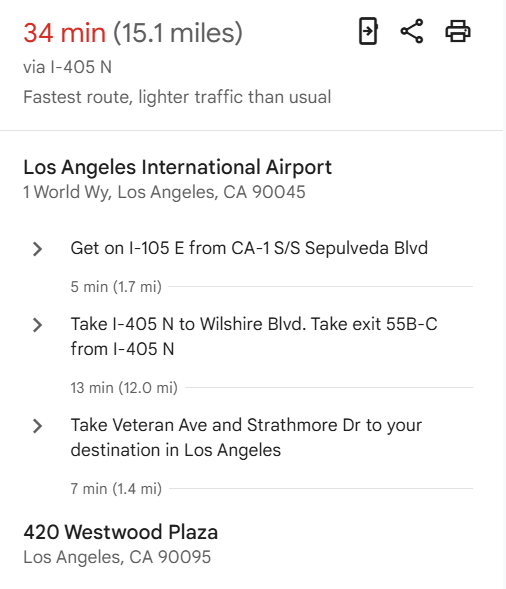
Engineering IV Building
Tesla Room #53-125
420 Westwood Plaza
Los Angeles, CA 90095
425 Westwood Plaza
Los Angeles, CA 90095
1-855-522-8252
Booking Website
On The Campus of the University of California Los Angeles
Engineering IV Building
Tesla Room #53-125
420 Westwood Plaza
Los Angeles, CA 90095
The majority of Workshop attendees will be staying at the Campus-preferred hotel directly across the street from the workshop venue:
UCLA Meyer and Renee Luskin Conference Center
425 Westwood Plaza, Los Angeles, CA 90095
1-855-522-8252
For those staying at the Luskin Center: A hot breakfast is complimentary with your stay if booked through the reserved link: HERE
Continental breakfast, freshly brewed coffee, and hot tea will be available from 8:00 am onwards just outside the meeting room in Engineering IV Building. Attendees are encouraged to join between 8:00 am and 8:30 am, allowing ample time for networking and catching up before the workshop begins.
Once onsite at the venue, attendees will connect to the network and follow the registration information.
More information to come.
Los Angeles is a global crossroads of culture, technology, research, and innovation, making it a fitting setting for a workshop focused on the future of personalized digital health. The city brings together diverse communities and industries spanning biomedical research, health care, artificial intelligence, technology, design, and entertainment, creating an environment where new ideas and collaborations can emerge across traditional boundaries.
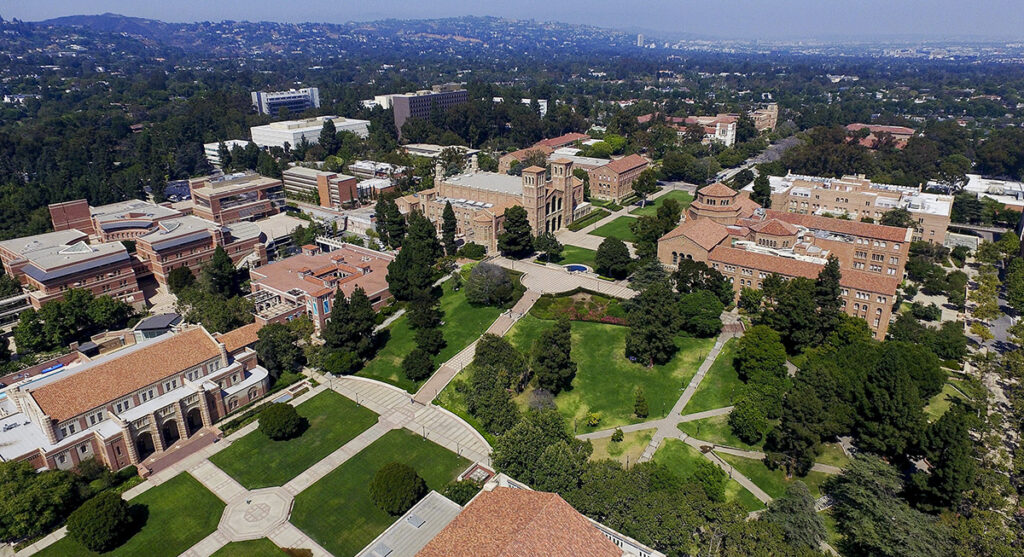
The workshop will take place at UCLA in Westwood, where a world-class public research university meets one of the world’s most dynamic cities. UCLA’s 419-acre campus supports extensive research, health care, cultural, and educational programs, while UCLA Health provides a major clinical and translational research environment throughout the region.
This setting is particularly appropriate for Autogenic mHealth. The convergence of biomedical science, AI, sensing, human-centered technology, and clinical research at UCLA and across Los Angeles provides a natural backdrop for examining how emerging technologies can move from scientific advances to systems that help individuals understand and manage their health in everyday life.
Participants will also have the opportunity to experience Westwood and Los Angeles beyond the workshop, with world-class museums, dining, arts and entertainment, and the Pacific coast all within reach of UCLA.
David Kennedy, PhD | Professor of Psychiatry | University of Massachusetts Medical School
Santosh Kumar, PhD | Lillian & Morrie Moss Chair of Excellence Professor | University of Memphis – Center Director, Lead PI, TR&D1, TR&D2, TR&D3
Jim Rehg, PhD | Founder Professor of Computer Science | University of Illinois Urbana-Champaign – Center Deputy Director, TR&D1 Lead
Susan Murphy, PhD | Professor of Statistics & Computer Science | Harvard University – TR&D2 Lead
Benjamin Marlin, PhD | Associate Professor | University of Massachusetts Amherst – TR&D1, TR&D2
Emre Ertin, PhD | Associate Professor | The Ohio State University – TR&D3 Lead
Mani Srivastava, PhD | Professor of Electrical Engineering & Computer Science | University of California, Los Angeles – TR&D3
Vivek Shetty, DDS, MD | Professor of Oral & Maxillofacial Surgery/Biomedical Engineering | University of California, Los Angeles – Training & Dissem. Lead
Lara Coughlin | Assistant Professor of Psychiatry | University of Michigan
Ewa Czyz | Associate Professor of Psychiatry | University of Michigan
John Dziak | Data Scientist | University of Michigan
Dave Fresco | Professor of Psychiatry | University of Michigan
Simon Goldberg | Associate Professor of Psychology | University of Wisconsin
Vik Kheterpal | Principal at CareEvolution, Inc.
Pedja Klasnja | Professor of Information | University of Michigan
Kristin Manella | Psychiatry, Taylor Lab | University of Michigan
Daniel McDuff | Staff Research Scientist and Manager @ Google | Co-Founder of RAIL
Mark Newman | Professor | University of Michigan
Mashfiqui Rabbi | Assistant Research Professor | University of Illinois Urbana-Champaign
Koustuv Saha | Assistant Professor | University of Illinois Urbana-Champaign
Rebecca Sripada | Associate Professor of Clinical Psychology | University of Michigan
Nathan Stohs | Embedded Systems Engineer | The Ohio State University
Hosnera Ahmed | Graduate Research Assistant | The University of Memphis
Yuyi Chang | Doctoral Student | The Ohio State University
Harish Haresamudram | Doctoral Student | University of Illinois Urbana-Champaign
Young Suh Hong | Doctoral Student | University of Michigan
Asim Gazi | Doctoral Student | Harvard University
Susobhan Ghosh | Doctoral Student | Harvard University
Bhanu Gullapalli | Doctoral Student | Harvard University
Xueqing Liu | Doctoral Student | Harvard University
Wanting Mao | Doctoral Student | University of Illinois Urbana-Champaign
Sameer Neupane | Doctoral Student | The University of Memphis
Mithun Saha | Doctoral Student | The University of Memphis
Sajal Shovon | Doctoral Student | The University of Memphis
Aditya Radhakrishnan | Doctoral Student | University of Illinois Urbana-Champaign
Maxwell Xu | Doctoral Student | University of Illinois Urbana-Champaign
Yi Yan | Graduate Research Associate | The Ohio State University
Kang Yang | Doctoral Student | UCLA
Director of Operations
Director, Research Data & Studies